The Taj Mahal is closed on Fridays. Here is what to do in Agra instead
Every Friday the Taj Mahal closes to sightseers, and it is easy to find out too late. The rest of Agra stays open, most of its monuments are cheaper that day, and the Taj is still there to look at from across the river.


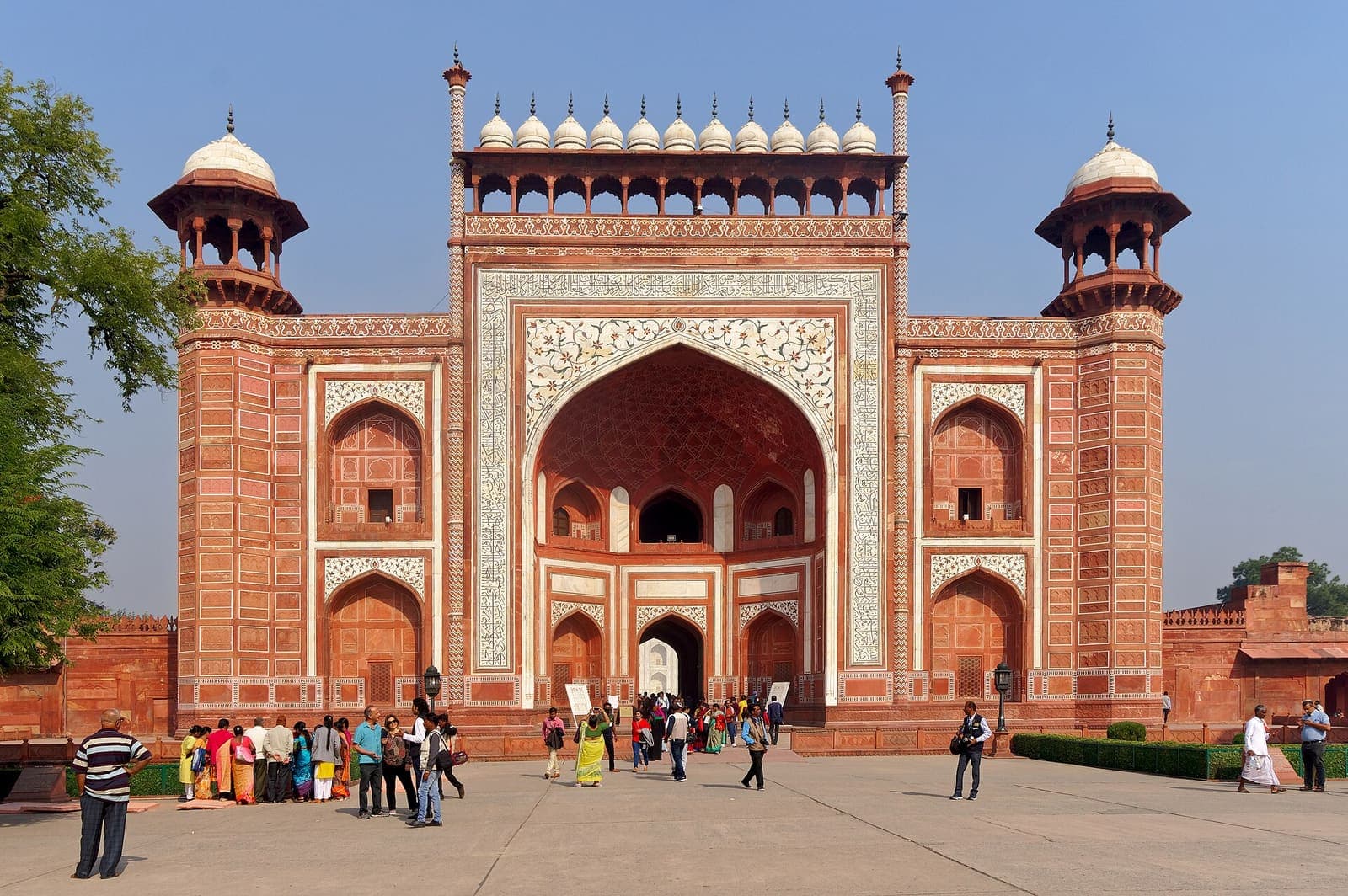
Photo: Antrix3 · Wikimedia Commons · CC BY-SA 4.0 · resized for web
No. The Taj Mahal is closed to visitors every Friday, all day. The gates open only for the midday prayer at the mosque inside the complex, from 12 noon to 2 PM, and that is for worshippers, not sightseers. The night viewing does not run on Fridays either.
Everything else does. Agra Fort, Itimad-ud-Daulah, Akbar’s tomb at Sikandra, Fatehpur Sikri and Mehtab Bagh are all open on a Friday from sunrise to sunset, most of their tickets are cheaper than on any other day, and Mehtab Bagh sits directly across the Yamuna from the Taj. You can lose the monument for a day and still see it twice.
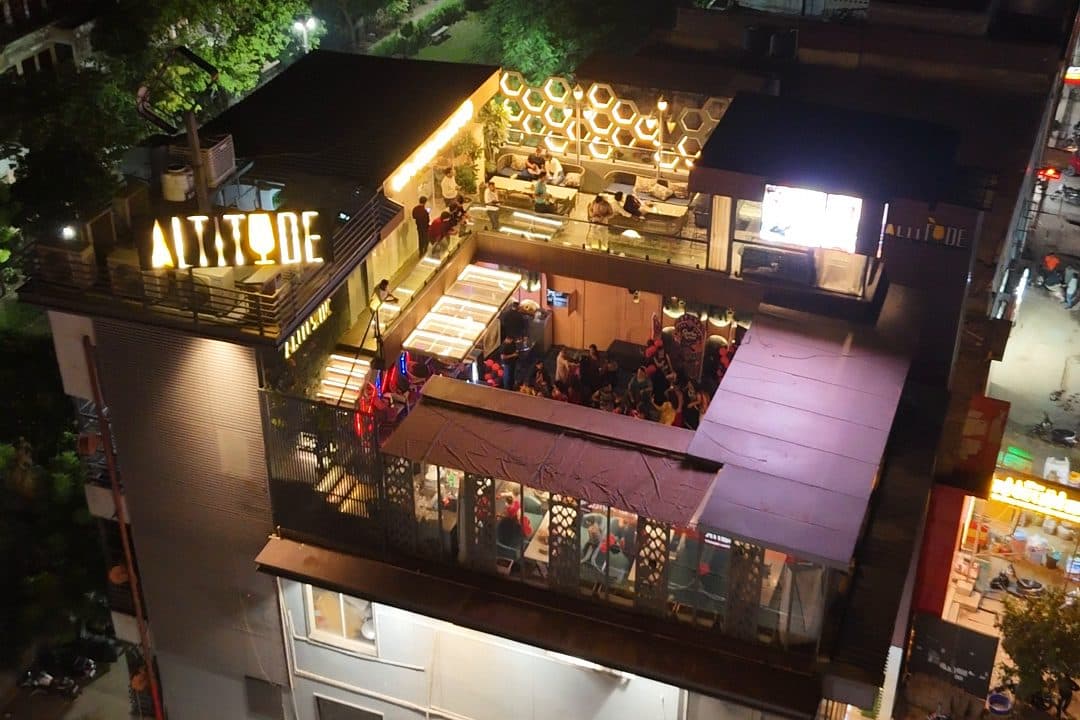
A word on who is writing: this is Altitude’s own journal, and Altitude, the rooftop restaurant on the top floor above MG Road 2, is ours. The dinner at the end of the day is our suggestion. Everything else on this page is a place we would send a friend.
Why the Taj Mahal is closed on Fridays
The Taj is a tomb with a working mosque inside its walls: the red sandstone building on the west side of the mausoleum. Friday is the day of the main congregational prayer, and on Fridays the Archaeological Survey of India keeps the complex for that alone. It is shut to visitors and open to worshippers for the namaz, between 12 noon and 2 PM.
There is no Friday ticket and no early-morning exception, so if your dates can move, move the Taj. On the other six days it opens 30 minutes before sunrise and closes 30 minutes before sunset. If they cannot move, read on. A Friday in Agra is a perfectly good day, just a different one.
See the Taj anyway, from Mehtab Bagh
Mehtab Bagh, the “moonlight garden”, is a Mughal garden on the far bank of the Yamuna, first laid out under Babur and later lined up by Shah Jahan with the Taj directly across the water. It is open every day from sunrise to sunset, Friday included, and on a day when the Taj is shut it is the best seat in Agra.
Entry is ₹25 for Indians and ₹300 for most foreign visitors, and children under 15 go free. The garden is about 8 km by road from Agra Fort, over the Yamuna bridge, so the drive takes longer than the map suggests. There are no food stalls inside; carry water.
Sunrise or sunset? Sunset, usually, because it ends a day of sightseeing instead of starting one in the dark. In Agra the sun goes down around 5:30 PM in winter and after 7 PM in June, and the garden closes with the light, so arrive with an hour in hand. Sunrise works too, if you can face the alarm.
Agra Fort, the obvious Friday
Agra Fort is open every day from sunrise to sunset and makes the natural centre of a Friday. Akbar rebuilt it in red sandstone from 1565 and Shah Jahan added the white marble; it stands about 2.5 km from the Taj, on the same bank of the river. Visitors enter by Amar Singh Gate.
Give it two hours and save the end for Musamman Burj, the tower where Shah Jahan spent his last years as his son’s prisoner. From there you can see the Taj down the Yamuna, a second look at it on a day it is closed. A Friday ticket is ₹40 for Indians and ₹600 for foreign visitors, against ₹50 and ₹650 the rest of the week.
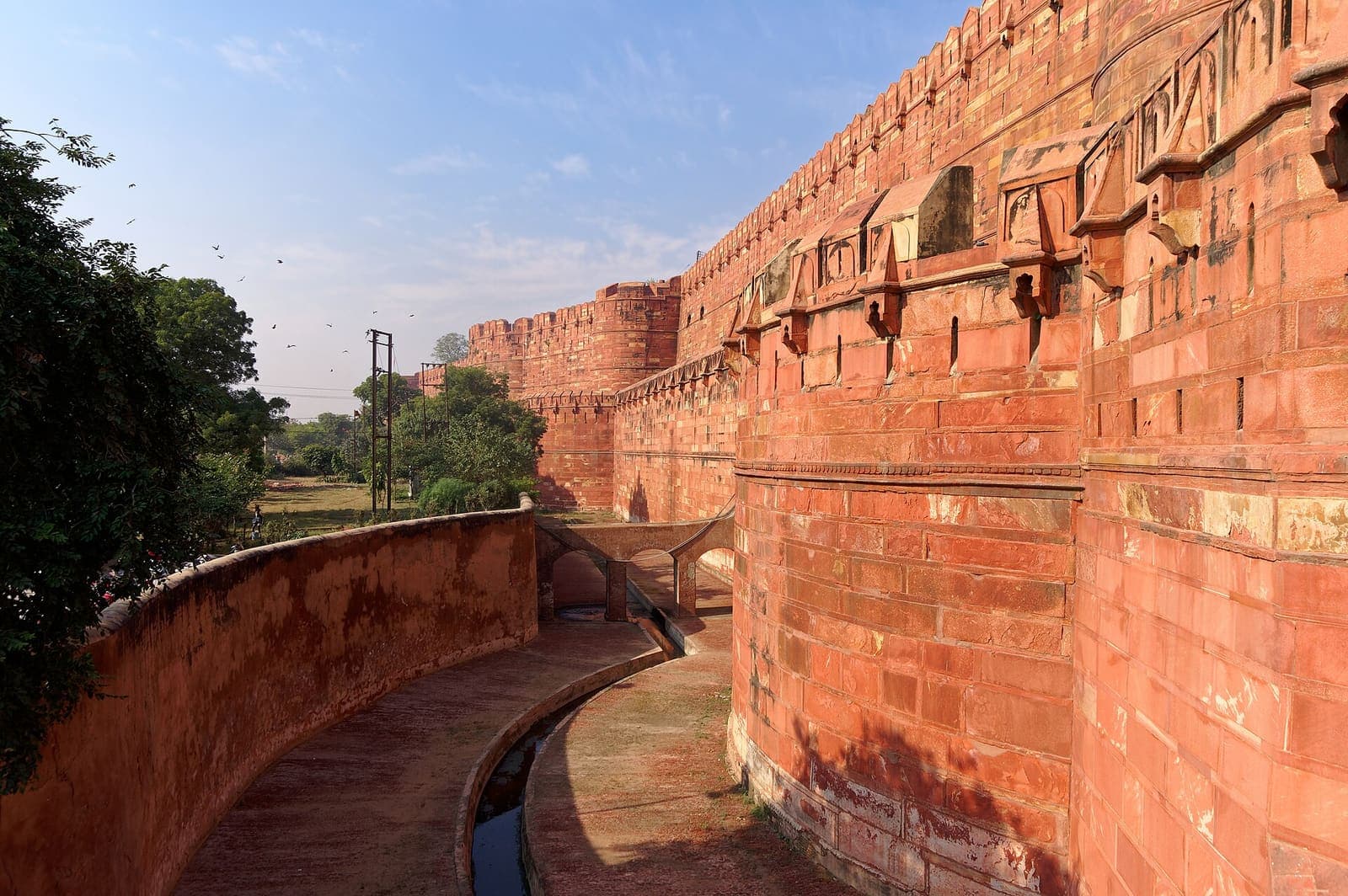
Photo: Jakub Hałun · Wikimedia Commons · CC BY-SA 4.0 · resized for web
The show after dark
The Fort has an evening too. UP Tourism’s light-and-sound show, Rang-e-Agra, is a projection-mapped history of the city that runs for about 45 minutes. The official listing gives two shows every day, in Hindi at 6:30 PM and in English at 7:30 PM, at ₹300 for Indian adults and ₹800 for foreign adults, with tickets online and at the Fort.
Two quieter tombs: Itimad-ud-Daulah and Sikandra
Itimad-ud-Daulah, built between 1622 and 1628 by the empress Nur Jahan for her father, is the tomb everyone calls the Baby Taj. It was the first Mughal building made entirely of white marble and the first to use inlay on this scale, and it is far quieter than the Taj ever is. It stands about 4 km from Agra Fort on the far bank, the same side as Mehtab Bagh, so the two make one afternoon.
Akbar’s tomb at Sikandra lies the other way, about 10 km from the city centre on the Delhi highway. Akbar began it and his son Jahangir finished it in 1613: a vast garden, a gateway topped with white marble minarets, and blackbuck grazing on the lawns. Go early, before the heat. Both tombs are open from sunrise to sunset, and on a Friday each costs ₹25 for Indians and ₹300 for foreign visitors.
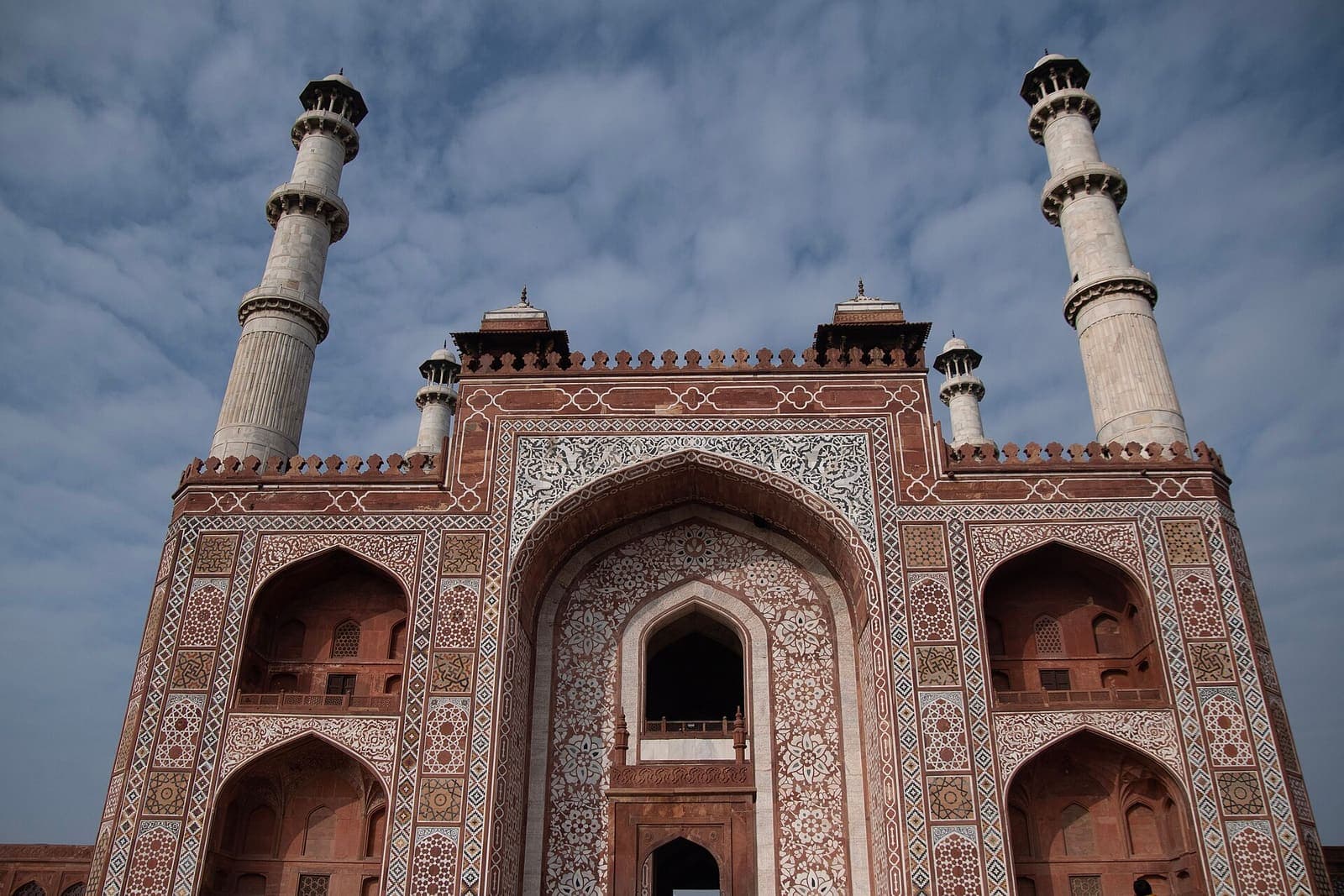
Photo: Darshanavenugopal · Wikimedia Commons · CC BY-SA 4.0 · resized for web
Fatehpur Sikri, if you have half a day to spare
Akbar’s red sandstone capital is about 37 km west of Agra and open every day from sunrise to sunset. A Friday ticket is ₹40 for Indians and ₹600 for foreign visitors. With the drive it takes a good half day, and our day-trip guide to Fatehpur Sikri covers the road, the guides and what to see.
One Friday note. The Jama Masjid at Sikri is a working mosque, and the marble tomb of Sheikh Salim Chishti in its courtyard is a working shrine, so the midday Friday prayer draws a congregation. See the palaces in the middle of the day and the mosque either side of the prayer, dress for a place of worship, and expect to leave your shoes at the gate.
Jama Masjid and the bazaars
Agra’s own Jama Masjid, built in 1648, stands a short ride from the Fort, with Kinari Bazaar and its neighbours packed into the lanes around it. Friday is the mosque’s big day too, so visit in the morning or once the midday prayer is over, and cover shoulders and knees.
Each market keeps its own weekly closing day, so ask your hotel which are open before you set out. Eat as you walk: bedai and jalebi in the morning, chaat in the afternoon. Our guide to Agra street food has the rest.
A Friday evening: two shows, then dinner
There is no night viewing on a Friday, so the evening is yours. There are two good ways to spend it, and in winter, with sunset around 5:30 PM, there is time for Mehtab Bagh first.
- Rang-e-Agra at Agra Fort. The projection show described above, in Hindi at 6:30 PM or in English at 7:30 PM.
- Mohabbat the Taj at Kalakriti. A staged musical about Shah Jahan and Mumtaz Mahal, with a replica of the Taj on stage, at the Kalakriti Cultural and Convention Centre on Fatehabad Road. The theatre lists a show every evening at 6:45 PM, with headsets translating into 12 languages and seats from ₹1,700.
The night viewing itself runs on five nights around each full moon, never on a Friday and not during Ramzan, with its own tickets and security check. Our guide to seeing the Taj at night has the dates and the drill.
A sample Friday, hour by hour
This is the version we would hand a friend with one full Friday, a car and a winter sunset. In summer, push the afternoon an hour later and choose between Mehtab Bagh and the show, because the sun sets after 7 PM.
| When | What |
|---|---|
| Sunrise to 8:30 AM | Akbar’s tomb at Sikandra, before the heat |
| 9:00 AM | Breakfast on the way into the old city: bedai, sabzi and a jalebi |
| 9:45 AM | The Jama Masjid, well before the midday prayer |
| 10:15 AM | Agra Fort through Amar Singh Gate; finish at Musamman Burj for the Taj |
| 12:15 PM | Kinari Bazaar and the old-city lanes |
| 1:00 PM | Lunch indoors, out of the sun |
| 3:30 PM | Across the river to Itimad-ud-Daulah, the Baby Taj |
| 4:30 PM | Mehtab Bagh, until it closes at sunset |
| 7:30 PM | Rang-e-Agra in English at Agra Fort (the Hindi show is at 6:30 PM) |
| 8:30 PM | Dinner, and no reason to hurry it |
Friday fees and timings at a glance
| Place | On a Friday |
|---|---|
| Taj Mahal | Closed to visitors; open 12 noon to 2 PM for the namaz only |
| Taj Mahal night viewing | Not held |
| Mehtab Bagh | Sunrise to sunset · ₹25 / ₹300 |
| Agra Fort | Sunrise to sunset · ₹40 / ₹600 |
| Itimad-ud-Daulah | Sunrise to sunset · ₹25 / ₹300 |
| Akbar’s tomb, Sikandra | Sunrise to sunset · ₹25 / ₹300 |
| Fatehpur Sikri | Sunrise to sunset · ₹40 / ₹600 |
| Rang-e-Agra, Agra Fort | 6:30 PM Hindi, 7:30 PM English · ₹300 / ₹800 |
| Mohabbat the Taj, Kalakriti | 6:45 PM · seats from ₹1,700 |
If Friday is your only day in Agra
- If your dates can move, move them. Nothing here replaces walking through the Taj’s gateway, and it is open the other six days.
- If you have a few hours, do Agra Fort, cross the river to Itimad-ud-Daulah, and finish at Mehtab Bagh in the last hour of light.
- If you have the whole day, add Sikandra first thing, or trade the morning for Fatehpur Sikri and be back in time for Mehtab Bagh.
- If you only have the evening, Mehtab Bagh will have closed, so make it a show and a late dinner.
- If the Taj at night is the point, Friday is the one night it cannot happen. Plan around the full moon instead.
And after that
We are open every day, Friday included, from 1:00 PM, with the last kitchen order at 11:00 PM and the doors closing at 11:30 PM. To be clear about one thing: you cannot see the Taj from our roof. That is what Mehtab Bagh is for. What we have is the city from the top floor above MG Road 2, a kitchen on the roof with a tandoor, a wok and a pizza oven, and a menu of 235 items from ₹20 to ₹830. There is a bar too, with beer, whisky, vodka, rum and cocktails.
Friday still counts as a weekday for our table offers. Book online and, Monday to Friday, a table booked for 1 to 6 PM gets 30% off whatever is ordered before 6 PM, or you can take 20% off at any time of day. It is one offer per bill, and none on 31 December, 1 January, major festivals or public holidays; the full terms are on the offers page. Every mocktail is 30% off from 1 to 6 PM, every day. Booking is free, confirmed instantly and cancellable up to two hours before.
If your Taj day turns out to be Thursday or Saturday after all, our one-day Agra itinerary is built around it, and the night viewing guide has the full-moon nights, minus the Fridays.